
Here we are again at the end of another year full of accomplishments, firsts, lessons, loss, discovery, and books - of course! As always, Juwayriyah and I are honored to have the opportunity to highlight some of the Muslim authors who published Muslim fiction and other works this year to add to the ever growing canon of diverse Western Muslim literature. This list intentionally highlights Muslim fiction and other works of literature written by Muslims who authentically lend their narratives, ideas, and thoughts to the world. These Muslim authors on this list represent Muslim communities from the West proudly. As always, I remind the world that Muslim authors, especially Muslim fiction authors, are necessary. They are vital. They are helping to reshape bookshelves at libraries, story times at homes and in schools, and dreams of books worms waiting to slip into the worlds and lives of Muslims. This Big End of Year List of Muslim Fiction Plus is a important platform for marketing our strength and diversity and inclusion to the Muslim and non Muslim publishing world alike. Writing a book is a not an easy task. It's not a highest paid task. It's definitely not an easy sell - especially for Muslim authors, whether traditionally or self-published or anything in between. It takes dedication and inner strength to wake up and write every single day to reach a publication date. It takes rejection and criticism and edits that seem endless and never 100% perfection. Writing takes grit and standing in your own voice - flaws and all, unashamed of your efforts. Therefore, I am appreciative of all of the Muslims on this list and any other book list for writing what makes your heart full and sharing it with the world.

#1 Zaynab's Enchanted Scarf by Robyn Abdusamad
#1 Zaynab's Enchanted Scarf by Robyn Abdusamad
Zaynab’s Enchanted Scarf teaches young readers about the historical contributions of Africans and African-Americans with beautiful illustrations that reflect the modernization of today as well as the past. Join Zaynab on a magical trip where she finds the courage and strength to find her way home. In this book, which is part of a series, little Zaynab travels to Africa to meet Queen Amina, Mansa Musa and Egyptian Royalty Ramses and Nefertiti.

Join Zakiyyah and her cousin, Jalil, on an adventure with her flower garden. This book will educate children about some of the most beautiful flowers on earth while sharing stories about prominent Kings and Queens of Africa. It is sure to spark children's curiosity and encourage them to learn of their history.

Taahir is a four-year-old autistic boy whose brains work a little differently. He communicates in a special way but he likes to have fun just like you. Is there a special way you communicate with other people? What things do you have in common with Taahir?

Meet Yusuf - An excitable young boy who loves nature and learning about the world. In this story, Yusuf and his Uncle Abdullah take a walk in the local park and learn about the importance of remembering Allah, the Islamic greeting, and the rights of God's Creation.

The Muslims book 8: The Red Shoes is a great addition to your Muslim children's book collection. In this book Huda wants to buy some new red shoes, but her mom refuses. Allah has already given Huda a lot of shoes. But Huda desperately wants some red shoes! Mom thinks of an excellent solution and together they both get what they want.'The Muslims', is an Islamic book about a Muslim family of 4. A father, mother, son and daughter, and their interactions with each other and the society around them. The books are meant to teach Muslim children Islamic moral lessons so they can better develop their relationship with their parents, friends, society, and their Lord. It will inshaa Allah educate them on how to respond to everyday challenges of life.If you're looking for a children's religious holiday book to add to your bookshelf, then look no further! Eidul Adha is sure to give a dramatic story while also promoting good morals and good conduct.

Grandma wears it clasped under her chin. Aunty pins hers up with a beautiful brooch. Jenna puts it under a sun hat when she hikes. Zara styles hers to match her outfit. As a young girl observes six very different women in her life who each wear the hijab in a unique way, she also dreams of the rich possibilities of her own future, and how she will express her own personality through her hijab. Written in sprightly rhyme and illustrated by a talented newcomer, Under My Hijab honors the diverse lives of contemporary Muslim women and girls, their love for each other, and their pride in their culture and faith.

While Mina is growing up in Iran, the center of her world is her grandmother. Whether visiting friends next door, going to the mosque for midnight prayers during Ramadan, or taking an imaginary trip around the planets, Mina and her grandma are never far apart. At once deeply personal and utterly universal, Mina Javaherbin’s words make up a love letter of the rarest sort: the kind that shares a bit of its warmth with every reader. Soft, colorful, and full of intricate patterns, Lindsey Yankey’s illustrations feel like a personal invitation into the coziest home, and the adoration between Mina and her grandma is evident on every page.

Sophia wants to fast for Ramadan this year. She tries to keep busy throughout the day so she won’t think about food. But when the smell of cookies is too much, she breaks her fast early. How can she be part of the festivities now?

With her new backpack and light-up shoes, Faizah knows the first day of school is going to be special. It's the start of a brand new year and, best of all, it's her older sister Asiya's first day of hijab--a hijab of beautiful blue fabric, like the ocean waving to the sky. But not everyone sees hijab as beautiful, and in the face of hurtful, confusing words, Faizah will find new ways to be strong.

Meet Yasmin! Yasmin is a spirited second-grader who's always on the lookout for those "aha" moments to help her solve life's little problems. Taking inspiration from her surroundings and her big imagination, she boldly faces any situation, assuming her imagination doesn't get too big, of course! A creative thinker and curious explorer, Yasmin and her multi-generational Pakistani American family will delight and inspire readers.

Helping children to know Body Safety Rules, and to speak up if someone makes them feel unsafe can be a challenging, and uncomfortable task for parents, caregivers, counselors and educators. Written from a child’s voice and perspective, My Voice Is My Super Power will help make the job a lot easier.Buddy is a young boy who teaches body safety, and helps his cousin cope with a real-life experience after she disclosed her abuse at their sleepover. With kid-friendly illustrations, and language, childen can read this book alone, or with an adult, to know the concept that their bodies are their own, their voice is their "Super Power", and they have the ability to use it to speak up, if they feel unsafe. This book will help educate, and empower, adults to teach children the concepts of: .Body safety .Unsafe touching .The dangers of keeping secrets .The importance of knowing the correct names of private parts .How to establish safe boundaries for children .

When Sadiq's Dugsi teacher can't take care of his yard because of an injury, Sadiq reluctantly agrees to help out. To make it more fun, Sadiq gathers together some friends to help. Can they care for their teacher's garden and have fun at the same time?
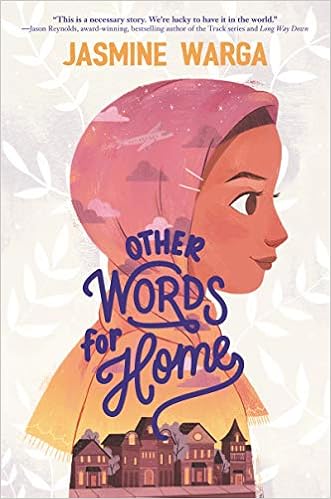
Jude never thought she’d be leaving her beloved older brother and father behind, all the way across the ocean in Syria. But when things in her hometown start becoming volatile, Jude and her mother are sent to live in Cincinnati with relatives.At first, everything in America seems too fast and too loud. The American movies that Jude has always loved haven’t quite prepared her for starting school in the US—and her new label of “Middle Eastern,” an identity she’s never known before. But this life also brings unexpected surprises—there are new friends, a whole new family, and a school musical that Jude might just try out for. Maybe America, too, is a place where Jude can be seen as she really is.

A marvel: something you find amazing. Even ordinary-amazing. Like potatoes—because they make French fries happen. Like the perfect fries Adam and his mom used to make together. An oddity: whatever gives you pause. Like the fact that there are hateful people in the world. Like Zayneb’s teacher, who won’t stop reminding the class how “bad” Muslims are. But Zayneb, the only Muslim in class, isn’t bad. She’s angry. When she gets suspended for confronting her teacher, and he begins investigating her activist friends, Zayneb heads to her aunt’s house in Doha, Qatar, for an early start to spring break. Fueled by the guilt of getting her friends in trouble, she resolves to try out a newer, “nicer” version of herself in a place where no one knows her. Then her path crosses with Adam’s. Since he got diagnosed with multiple sclerosis in November, Adam’s stopped going to classes, intent, instead, on perfecting the making of things. Intent on keeping the memory of his mom alive for his little sister. Adam’s also intent on keeping his diagnosis a secret from his grieving father. Alone, Adam and Zayneb are playing roles for others, keeping their real thoughts locked away in their journals. Until a marvel and an oddity occur. Marvel: Adam and Zayneb meeting. Oddity: Adam and Zayneb meeting.

Allie Abraham has it all going for her--she's a straight-A student, with good friends and a close-knit family, and she's dating cute, popular, and sweet Wells Henderson. One problem: Wells's father is Jack Henderson, America's most famous conservative shock jock...and Allie hasn't told Wells that her family is Muslim. It's not like Allie's religion is a secret, exactly. It's just that her parents don't practice and raised her to keep her Islamic heritage to herself. But as Allie witnesses ever-growing Islamophobia in her small town and across the nation, she begins to embrace her faith--studying it, practicing it, and facing hatred and misunderstanding for it. Who is Allie, if she sheds the façade of the "perfect" all-American girl? What does it mean to be a "Good Muslim?"And can a Muslim girl in America ever truly fit in?

Ayesha Shamsi has a lot going on. Her dreams of being a poet have been set aside for a teaching job so she can pay off her debts to her wealthy uncle. She lives with her boisterous Muslim family and is always being reminded that her flighty younger cousin, Hafsa, is close to rejecting her one hundredth marriage proposal. Though Ayesha is lonely, she doesn't want an arranged marriage. Then she meets Khalid, who is just as smart and handsome as he is conservative and judgmental. She is irritatingly attracted to someone who looks down on her choices and who dresses like he belongs in the seventh century. When a surprise engagement is announced between Khalid and Hafsa, Ayesha is torn between how she feels about the straightforward Khalid and the unsettling new gossip she hears about his family. Looking into the rumors, she finds she has to deal with not only what she discovers about Khalid, but also the truth she realizes about herself.

G. Willow Wilson’s debut novel Alif the Unseen was an NPR and Washington Post Best Book of the Year, and it established her as a vital American Muslim literary voice. Now she delivers The Bird King, a stunning new novel that tells the story of Fatima, a concubine in the royal court of Granada, the last emirate of Muslim Spain, and her dearest friend Hassan, the palace mapmaker. Hassan has a secret―he can draw maps of places he’s never seen and bend the shape of reality. When representatives of the newly formed Spanish monarchy arrive to negotiate the sultan’s surrender, Fatima befriends one of the women, not realizing that she will see Hassan’s gift as sorcery and a threat to Christian Spanish rule. With their freedoms at stake, what will Fatima risk to save Hassan and escape the palace walls? As Fatima and Hassan traverse Spain with the help of a clever jinn to find safety, The Bird King asks us to consider what love is and the price of freedom at a time when the West and the Muslim world were not yet separate.

As if track practice, yearbook meetings, and tumultuous friendships weren't enough, sisters Hannah and Noreen are catapulted into a disorienting new reality when their dad returns home from his medical mission in Syria a haunted and broken man. All of a sudden, their once tight knit family is falling to pieces. Little do they know, things will become a lot more crazy and unpredictable as each of them fights a different battle.

Salma, a new bride who is happily married to her husband, moves into her in-laws’ house as part of their South Indian culture. A new life, a new beginning, and a new family in a new country. Staying in a place far away from her loved ones, with no one to rely on but her husband, she undergoes the realities of life living under the same roof as her mother-in-law. How will she cope with the lifestyle changes and the daily challenges? Will her dreams of having a good relationship with her mother-in-law come true? Or will she discover the dreaded monster-in-law?Fatima wants to be a good mother-in-law to Salma and yearns for a good relationship with her. Life and time throw opportunities her way to prove herself. Would she take the right decisions and keep her best foot forward? Or would she succumb to her ego and cultural stereotypes?This book is about the emotional tug-of-war between a daughter-in-law and her mother-in-law. Sandwiched between the two most important women of his life is Faisal, the son of one and husband of the other.The story revolves around the lives of these three characters and the relationships they share with each other as they learn to stick together despite the ups and downs they face as a joint family.

God created trials, so He could test you with your truth. You are born free, but you must learn to be pain-free. 37 Lessons on How to Gain from Loss: A Believer's Journey from Trial to Triumph is my own story of remembering, realizing and reaffirming this basic human truth. Drenched in pain, I had limped so far on the Road of Loss that I had lost my way back home. With bleak hope left on my trail, I finally approached the point of no return, awaiting to be consumed by my lingering darkness. However, upon setting my last step on the fall's edge, I was thundered by yet another torment--my biggest trial to date, of losing my mother, the center of my universe. Finding myself trapped in the most turbulent flight for the next twenty-four hours, I was taxed by a tremendous choice, not between action and non-action, or belief and unbelief, but rather between choice and none at all. Would I resist or submit to my tribulation?

#21 Keeping Your Muslim Man Monogamous by Khadijah Rashid
Two years into my marriage, I received the shock of my life. I discovered that my husband and the father to my newborn son, had been unfaithful. The next two years would be spent repairing the damage that had been done. But most importantly, to get to the root of where our relationship had gone wrong. What I discovered would leave me floored. Including the fact that a hijab-clad former friend had been the culprit. Her point of entry? A “sext” message, and a request to be his second wife. It was only by the grace of God, that I, and my marriage survived. And now I want to pass these lessons onto you. Whether you are thinking about marriage, or already married, inshallah this book will give you the tools to properly combat the “Polygamy Problem,” currently plaguing our communities. If you are a polygamist, or interested in it, inshallah this book will help you to see the hurt and destruction it can cause, if you don’t handle it correctly.
Two years into my marriage, I received the shock of my life. I discovered that my husband and the father to my newborn son, had been unfaithful. The next two years would be spent repairing the damage that had been done. But most importantly, to get to the root of where our relationship had gone wrong. What I discovered would leave me floored. Including the fact that a hijab-clad former friend had been the culprit. Her point of entry? A “sext” message, and a request to be his second wife. It was only by the grace of God, that I, and my marriage survived. And now I want to pass these lessons onto you. Whether you are thinking about marriage, or already married, inshallah this book will give you the tools to properly combat the “Polygamy Problem,” currently plaguing our communities. If you are a polygamist, or interested in it, inshallah this book will help you to see the hurt and destruction it can cause, if you don’t handle it correctly.

#22 Things That Shatter by Kaighla Um Dayo
 #23 Love Scripts Getting Through To Him by Naielah Ackbarali
An inspiring and uplifting story of a woman struggling to communicate her needs to her husband and how she overcomes it using Muslima Coaching’s wife tactics. A mother of two children and a doctor by profession, Sarah is struggling in her marriage. Travel with her in her journey to understand how to communicate her needs to her husband and witness her change her marriage with the advice of someone that she would least expect to give it to her. Sarah’s story is relatable, heart-warming, and a must read for every Muslim wife. The coach’s personal analysis of the lessons learnt is included too.


 #28 Open To Love Lyndell Williams

#32 Through the Fire: A Woman's Journey by Yasmeen Abdur-Rahman
Through The First: A Woman's Journey is Author Yasmeen Abdur-Rahman's debut book. It is for all women who are divorced, single parents, struggling to raise their children on their own
 #33 The 40 Day Guide to Reset Your Metabolism, Lose Weight and
Optimize Your Health by Mubarakah Ibrahim
The mR40 method is a practical guide to help you eat and move, reprogramming your metabolism to burn excess fat, break sugar addiction, reduce inflammation, balance hormones, increase your energy and give you mental clarity and focus.
Author Umm Juwayriyah, M.A . is internationally acclaimed author and urban educator. She has written five books, including the best-sellers, The Size of a Mustard Seed and Hind's Hands ~ A Story About Autism. She teaches, lectures, stages plays, travels regularly to speak about literacy and Muslim youth, drinks fancy tea, tries to bake, and loves to read Muslim fiction.
Juwayriyah Ayed is a full-time college student, world traveler, avid reader, lover of cats & color palettes, and cheese. She has co-authored two books, Hind's Hands ~ A Story About Autism and The Princess and the Good Deed. She is currently working on her first YA novel.
In 2009, Kaighla—a young, single mother from the Midwest, and a fresh convert to Islam—married the Egyptian sheikh of a mosque in Brooklyn. Unbeknownst to her, he hadn't divorced his wife back home and was about to be deported. Two years later, she moved with him, her son, and their baby girl to his hometown in rural Egypt, where she was abused and neglected—along with his first wife—for the next four years. A story about what happens when Muslim women are broken by Muslim men and find the courage to heal themselves through the real Islam, Things That Shatter aims to shed light on abuse and healing within the Muslim community and to help vulnerable women protect themselves from men like him.
#23 Love Scripts Getting Through To Him by Naielah AckbaraliAn inspiring and uplifting story of a woman struggling to communicate her needs to her husband and how she overcomes it using Muslima Coaching’s wife tactics. A mother of two children and a doctor by profession, Sarah is struggling in her marriage. Travel with her in her journey to understand how to communicate her needs to her husband and witness her change her marriage with the advice of someone that she would least expect to give it to her. Sarah’s story is relatable, heart-warming, and a must read for every Muslim wife. The coach’s personal analysis of the lessons learnt is included too.
Aisha Sharif's debut collection is an exploration in belonging--to a family, to a community, to a faith. In poems that navigate the boundaries of these different types of belonging, Sharif examines both what is lost and what is gained.

When Leila looks in the mirror, she doesn’t know if she likes what she sees. But when her grandmother tells her the saffron beads on her scarf suit her, she feels a tiny bit better. So, Leila spends the rest of their family dinner night on the lookout for other parts of her she does like. Follow Leila’s journey as she uses her senses of sight, smell, taste, touch to seek out the characteristics that make up her unique identity, and finds reasons to feel proud of herself, just as she is.

Black Muslim youth stand at the cross section of anti-Black racism and anti-Muslim sentiments. What is it like to identify with both of these uniquely marginalized groups? How are young Black Muslims thriving in these conditions? What can adults do to ensure optimal development? Following 10 years of work from the authors who have pioneered research on American Muslim youth and counseling Muslims, this groundbreaking book explores the complex factors impacting Black Muslim youth outcomes. Centering the voices of Black Muslim youth, this book summarizes the latest research and is a road map for individuals and institutions invested in transforming feelings and experiences of marginalization, to those of strength and resiliency.
Irwin is not only the local Librarian; he’s also a book snob and an all-around grouch. There’s nothing he values more than his privacy. As a loner, he’s happy to be surrounded by books instead of subjected to the incessant blatherings of dysfunctional people. The one thing Irwin despises more than people is change. He’s content in his predictable, routine existence…until a young girl barrels her way into his dreary life and turns it upside down. Harper is witty, smart, free-spirited—but most of all, stubborn. Baffled by her need to gain his friendship, Irwin does his best to brush her off, but Harper refuses to budge. In fact, it only makes her latch onto him even more. Friendship, after all, can be found in the most unusual places.
#28 Open To Love Lyndell Williams
Hafsah grows closer to Faheem, falling hard for the sexy younger man. He is smooth and stokes feelings she meant to suppress. Faheem uses all his charms to make sure Hafsah becomes his, but flirting can be a dangerous thing when committing to no sex outside of marriage. The two play with some serious fire that might burn them both

Zaytuna just wants to be left alone to her ascetic practices and nurse her dark view of the world. But when an impoverished servant girl she barely knows comes and begs her to bring some justice to the death of a local boy, she is forced to face the suffering of the most vulnerable in Baghdad and the emotional and mystical legacy of her mother, a famed ecstatic whose love for God eclipsed everything. The Lover is a historically sensitive mystery that introduces us to the world of medieval Baghdad and the lives of the great Sufi mystics, washerwomen, Hadith scholars, tavern owners, slaves, corpsewashers, police, and children indentured to serve in the homes of the wealthy. It asks what it means to have family when you have nearly no one left, what it takes to love and be loved by those who have stuck by you, and how one can come to love God and everything He’s done to you.

A short story collection that inspires faith and embraces our interconnected humanity.

When Caryn Blake, a prominent, black litigation expert, walks in on her cheating husband entertaining his latest girlfriend, she goes a little crazy. After everything she’s done for him; giving him the space to live it up, while she makes the moves securing a name for herself and fame for both of them, the betrayal is just too much. However, revenge is bitter-sweet, especially when it’s taken too far. Caryn decides to take a much needed break in the most remote state she can find. With nowhere to go, and no one to take her, Caryn makes the most of a bad situation, finding friends and a lover she never thought she deserved. When her face is splashed across the local news as a wanted criminal, she needs to return home and face the music. She’s not alone though. Her arsenal is loaded, and she has a wild card up her sleeve. Because as far as Caryn is concerned, she’s not disposable.
#32 Through the Fire: A Woman's Journey by Yasmeen Abdur-Rahman
Through The First: A Woman's Journey is Author Yasmeen Abdur-Rahman's debut book. It is for all women who are divorced, single parents, struggling to raise their children on their own

Optimize Your Health by Mubarakah Ibrahim
The mR40 method is a practical guide to help you eat and move, reprogramming your metabolism to burn excess fat, break sugar addiction, reduce inflammation, balance hormones, increase your energy and give you mental clarity and focus.
Author Umm Juwayriyah, M.A
. is internationally acclaimed author and urban educator. She has written five books, including the best-sellers, The Size of a Mustard Seed and Hind's Hands ~ A Story About Autism. She teaches, lectures, stages plays, travels regularly to speak about literacy and Muslim youth, drinks fancy tea, tries to bake, and loves to read Muslim fiction.Juwayriyah Ayed
is a full-time college student, world traveler, avid reader, lover of cats & color palettes, and cheese. She has co-authored two books, Hind's Hands ~ A Story About Autism and The Princess and the Good Deed. She is currently working on her first YA novel. 


